When you catch a glimpse of a blue tint in glasses, you're seeing one of two very different technologies at work. It might be a lens with a dedicated blue-light filter, or it could simply be the subtle reflection from a high-quality anti-glare coating. Knowing the difference is everything when it comes to getting the protection and clarity you really need.
Looking for screen-filter lenses instead of a fashion tint? See our guide to the best blue light blocking glasses.
Understanding the Blue Tint in Your Glasses

That flash of blue you see on someone's lenses isn’t just for looks; it’s a sign of sophisticated lens technology. But not all blue sheens are the same, and the source of that color tells you what the lens is designed to do.
Think of a true blue-light filtering lens as a specific type of gatekeeper. It has a very particular job: to stop a portion of the high-energy visible (HEV) blue light from screens and the sun before it ever reaches your eye.
An anti-reflective (AR) coating, on the other hand, is all about maximizing clarity. Its main purpose is to eliminate distracting reflections and glare, letting more light pass through for a crisper, clearer view of the world. The faint blue or green sheen you might see is just a side effect of how it bends light—it’s not the main event.
Two Causes of a Blue Sheen
This difference is more than just technical—it’s practical. One technology tackles digital eye strain, while the other is focused on pure visual performance. Your lenses can have one, the other, or both.
To make it even clearer, let's compare these two technologies side by side.
Two Causes of Blue Tint At a Glance
The table below breaks down the key differences between a lens built to filter blue light and one with a standard anti-reflective coating.
| Feature | Blue-Light Filtering Lens | Anti-Reflective (AR) Coating |
|---|---|---|
| Primary Goal | To block a percentage of blue light from screens and the sun. | To reduce glare and reflections for maximum visual clarity. |
| Why You See Blue | You're seeing blue light being actively reflected away from the eye. | It's a harmless, residual reflection from the coating's layers. |
| Main Benefit | May help reduce digital eye strain and support sleep patterns. | Provides sharper vision and improves cosmetic appearance. |
| Lens Appearance | Often has a noticeable blue or purple reflection and a slight warm tint. | Can have a faint blue, green, or purple reflection; the lens itself is clear. |
Ultimately, understanding this distinction helps you choose the right tool for the job.
So, when we talk about that blue color, we’re looking at one of two things:
Blue-Light Filtering Technology: These lenses are made with special molecules, either mixed into the lens material itself or applied as a unique coating. Their entire purpose is to absorb or reflect a portion of blue light waves. That visible blue reflection is a clear sign that the filter is doing its job and deflecting that specific type of light.
Advanced Anti-Reflective (AR) Coatings: An AR coating is a microscopically thin, multi-layered treatment that’s all about eliminating glare from the front and back of your lenses. When you get rid of those distracting reflections, you see better and your eyes feel more comfortable. We explore this in more detail when discussing the right anti-reflecting coating for prescription eye glasses. The faint color you see is just a byproduct of the specific formula the manufacturer uses.
Getting this basic difference down is the first step. It lets you look beyond the color and focus on the real-world benefits you want from your eyewear.
How Blue Light Affects Your Eyes and Brain

To really grasp why a blue tint in glasses is more than just a style choice, we need to talk about blue light itself. Think of the visible light spectrum as a rainbow. On one end, you have red light with long, gentle waves. On the other end, right next to invisible UV rays, you’ll find blue light with its short, high-energy visible (HEV) wavelengths.
The sun is our planet’s biggest source of blue light, but our daily lives are now saturated with it from artificial sources. Every time you glance at your phone, work on your laptop, or watch TV, you're getting a concentrated dose.
This is a modern problem. Your eyes have natural filters that do a great job of blocking most UV light from reaching your sensitive retina. However, they're not nearly as good at filtering out the constant stream of blue light coming from our screens, and that’s where the conversation about eye health and comfort really starts.
The Impact on Digital Eye Strain
Ever get to the end of a long workday and feel that gritty, tired, fuzzy feeling in your eyes? You’re likely experiencing digital eye strain, and blue light is a key player.
Because of its high-energy, short-wavelength nature, blue light scatters more easily than other colors. It’s like trying to see clearly through a fine mist. This scattering effect creates visual "noise," reducing contrast and making your eyes work overtime just to stay focused.
Over time, this constant effort can trigger a whole host of symptoms, from tired eyes and headaches to blurred vision and dryness. A lens with a blue-light filter—the source of that noticeable blue tint in glasses—is specifically engineered to cut through this visual noise for a sharper, more comfortable experience.
By filtering out a significant portion of this scattered blue light, the lens effectively enhances contrast. This gives your eyes a calmer visual field, allowing your focus muscles to relax and easing the strain that builds up after hours in front of a screen. We cover the full range of blue light glasses benefits and how they can make your day-to-day more comfortable.
Blue Light and Your Brain's Internal Clock
Beyond just making your eyes feel tired, blue light has a powerful effect on your brain's internal clock, also known as your circadian rhythm. During the day, blue light from the sun is actually a good thing; it tells your brain it’s time to be awake and alert.
The trouble starts when you’re exposed to that same kind of light from your screens late at night. Your brain can't tell the difference between sunlight and screen light, so it gets a confusing signal. It responds by suppressing the production of melatonin, the hormone that signals to your body that it’s time to wind down and go to sleep.
This isn’t just a small annoyance—it’s a growing health concern. Sleep issues linked to evening blue light exposure are increasingly common, especially in younger people whose sleep cycles are more sensitive to light. Research confirms that using digital devices before bed can directly interfere with melatonin levels, making it harder to fall asleep and lowering the quality of the sleep you do get.
What Blue Light Glasses Can and Cannot Do
With so much buzz around blue light glasses, it's easy to get tangled up in the marketing hype. As an optical professional, my job is to help you cut through the noise and understand what these lenses are truly designed for. Think of them as a specialized tool in your wellness toolkit—incredibly effective for certain problems, but not a magic bullet for every vision complaint.
Let's be real about what to expect. A lens with a quality blue light filter is built to tackle two very modern problems: digital eye strain and the disruption of our natural sleep cycle. It works by managing the specific wavelengths of high-energy light that our screens constantly push into our eyes.
It’s just as important, however, to know what they don't do. These glasses aren't a replacement for your prescription if you have a refractive error, and they aren't a proven shield against serious eye diseases like macular degeneration. Their real power is in boosting your daily comfort and helping your body maintain its natural rhythm.
What Blue Light Lenses Can Do for You
The biggest, most evidence-backed benefit of blue light filtering is how it eases digital eye strain. If your day involves hours staring at a screen, you know the feeling all too well: the tension headaches, that gritty, tired-eye sensation, and vision that seems to blur in and out. By filtering out the harsh, high-energy blue light that creates a kind of visual "static" and washes out contrast, these lenses can make your screen time feel significantly more comfortable.
They essentially create a smoother, calmer visual environment for your eyes. This often leads to:
- Fewer Headaches and Less Eye Fatigue: The lenses reduce the focusing effort your eyes have to make, which can help stop those end-of-day tension headaches and that feeling of pure exhaustion.
- Improved Visual Comfort: Many people I work with report that screens just feel less harsh and more soothing, making it much easier to get through a long day of computer work.
- Better Focus During Screen Use: When your eyes aren't fighting through visual noise, they can hold focus more easily. This can make a real difference in your productivity and help cut down on simple mistakes.
The other major win is for your sleep. Our bodies are wired to associate blue light with daytime. When you’re exposed to it from screens in the evening, it can fool your brain into delaying the release of melatonin, the hormone that tells your body it's time to sleep. Wearing blue light glasses for an hour or two before bed can help your natural sleep-wake cycle get back on track, making it easier to wind down and fall asleep. You can explore the full range of blue light glasses benefits for a deeper look at how they support sleep and daily well-being.
What Blue Light Lenses Cannot Do
Now for the other side of the coin. Understanding what a blue tint in glasses doesn't do is critical to making a smart purchase. Some of the broader marketing claims you see just aren't backed by solid scientific consensus yet.
Blue light glasses are not a substitute for proper medical eye care. They are a comfort-enhancing tool, not a treatment for eye disease or a replacement for a correct prescription.
Here are the key limitations to keep in mind:
- They Don't Cure Eye Diseases: As of now, there’s no conclusive proof that the blue light from our digital devices causes permanent retinal damage or serious conditions like age-related macular degeneration (AMD). While research is ongoing, you shouldn't rely on blue light glasses as a shield against these diseases.
- They Don't Correct Your Vision: If you're nearsighted, farsighted, or have astigmatism, you still need prescription lenses. A blue light filter won't magically make blurry words sharp. The good news? We can easily add a blue light filter directly onto your corrective lenses.
- They Aren't a Free Pass for Unlimited Screen Time: While they definitely improve comfort, they don’t give you a pass to ignore healthy screen habits. The 20-20-20 rule—every 20 minutes, take a 20-second break to look at something 20 feet away—is still one of the best things you can do for your eyes.
If you’re thinking about which options might be right for you, our guide to the best blue light blocking glasses is a great place to start. By understanding both their powerful advantages and their clear limits, you can make a choice that genuinely supports your visual comfort and daily life.
Who Actually Needs Blue Light Glasses?
With all the buzz around blue light, it’s easy to think everyone needs a special pair of glasses. But the truth is, the need for a blue-light-filtering lens is incredibly personal. It all comes down to your daily habits, your work, and how your eyes feel.
Not everyone is a candidate, but for some people, they can be an absolute game-changer. Think of it as a simple matter of exposure. Someone who works outdoors and prefers physical books has a vastly different visual life than someone who clocks eight hours in front of a monitor and then unwinds with a tablet.
So, how do you know if you're in a high-need category? Let's walk through a few common profiles. See if one of these sounds like your typical day, because your routine is the best clue as to whether a blue tint in glasses is the right move for you.
The Office Professional
Is your workday one long marathon of screen time? If you're an office professional, your day is likely a blur of spreadsheets, video calls, endless emails, and digital reports. This is probably the number one reason people first look into blue light lenses.
All that constant, close-up screen use puts a serious load on your eyes. The high-energy blue light pouring from your monitor can contribute to digital eye strain, forcing your eyes to work overtime just to stay focused.
For professionals who live on their screens, blue light glasses are less of a luxury and more of an ergonomic tool. A good office chair supports your back; these lenses are designed to support your eyes, helping ease the fatigue that builds from 9 to 5.
If you consistently end your days with tired, gritty-feeling eyes or nagging tension headaches, you're a perfect candidate. Specialized lenses can take this even further. For instance, Shamir Workspace Lenses are designed specifically for the intermediate distances of a typical desk setup, providing even more targeted relief.
The University Student and Late-Night Scroller
Students and night owls face a unique challenge. Those long nights spent cramming for an exam on a laptop or just scrolling through your phone in bed expose your brain to stimulating blue light right when it should be powering down.
This late-night exposure can throw your natural sleep cycle, or circadian rhythm, completely out of whack. It essentially tricks your brain into thinking it's still daytime, which can suppress the production of melatonin—the hormone that tells your body it's time for sleep. The result? You might struggle to fall asleep or find your rest isn't as deep as it should be.
For this group, blue light glasses can serve two key functions:
- Easing Eye Strain: During marathon study sessions, they reduce the visual stress, much like they do for office workers.
- Protecting Your Sleep: Worn in the hours before bed, they can help your brain get the message that it’s time to wind down, paving the way for a better night's rest.
Children and Increased Screen Time
We absolutely have to talk about kids. A child's eyes are still developing, and the lens inside their eye is much clearer than an adult's. This means more high-energy blue light can pass straight through to the retina.
Between digital classrooms, online gaming, and social media, kids' screen time has skyrocketed. This combination of higher exposure and less natural protection makes them especially vulnerable. Here in South Florida, we hear from many parents who are rightfully concerned about the long-term impact on their children's eye health.
Adding a protective blue tint in glasses can be a smart, proactive step to help manage their visual comfort and well-being in a screen-filled world.
Choosing the Right Blue Light Solution
When you start looking into blue light glasses, it’s easy to feel a bit lost in all the options. How do you know which one is actually right for you? The truth is, there's no single "best" solution—it's about finding the right technology for your eyes and your daily life.
The decision really comes down to two main types of lenses: those with the filter built right into the lens material, and those with a specialized coating applied to the surface. While both can create that characteristic blue tint in glasses, they work in very different ways.
Embedded Filters vs. Specialized Coatings
Lenses with embedded blue light filtering have the protective elements mixed directly into the lens material itself during manufacturing. You can think of it like a sponge engineered to soak up a specific wavelength of light. As high-energy visible (HEV) light tries to pass through, the lens material naturally absorbs a portion of it. The big advantage here is durability and clarity; the protection can't scratch off, and the lenses often look almost perfectly clear, which is great for all-day wear without skewing your color perception.
Then you have blue light filtering coatings. These are highly advanced, multi-layer treatments applied to the outside of the lens. Instead of absorbing the light, the coating acts like a selective mirror, reflecting a percentage of blue light waves away before they ever reach your eye. This is what creates that noticeable blue or purple reflective sheen you see on many blue light glasses. These coatings are very effective, but they absolutely must be paired with a quality anti-glare treatment. Otherwise, you’re just trading one type of glare for another. We cover this in-depth in our guide on the benefits of an anti-glare coating for glasses.
Matching the Solution to Your Needs
So, how do you choose? The best answer is found in your daily routine. We can help you figure out the perfect fit based on how much time you spend on screens, your sensitivity to light, and even your personal style.
This chart breaks down how different lifestyles often point toward different lens choices.
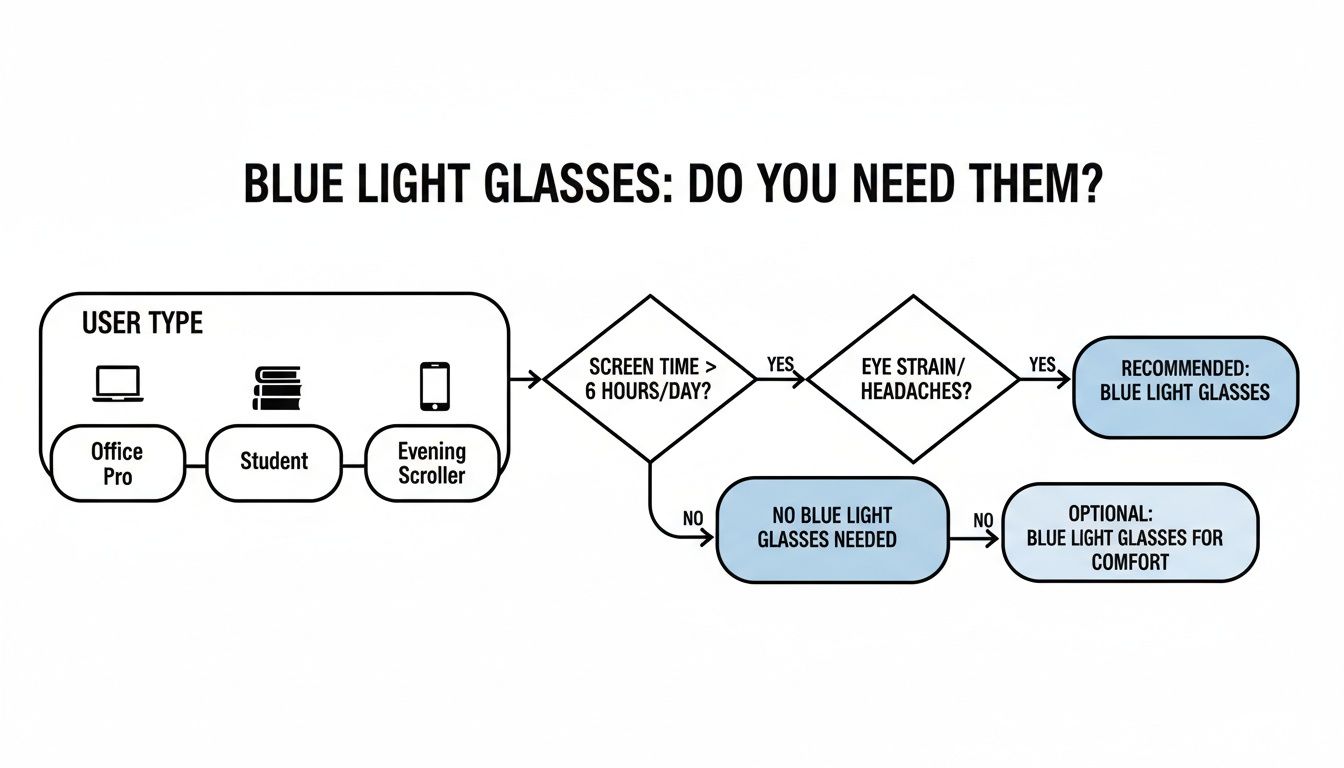
The takeaway is simple: personalization is everything. An office professional needs consistent, comfortable vision for eight hours straight, whereas someone who mostly uses their tablet at night needs stronger protection to keep their sleep cycle on track.
This focus on individual needs is driving huge growth in the eyewear market. In fact, the global demand for blue light blocking glasses is projected to become a $3.0 billion industry by 2026, with an annual growth rate of about 7.3%. It's a direct reflection of how much our screen habits have changed.
The most effective blue light solution is one that is perfectly aligned with your unique visual demands. This isn't about buying a generic product off the shelf; it's about investing in a custom-tailored tool for your eye health.
For example, some people benefit from a lens with a more visible, darker tint. We often recommend these for those who are highly sensitive to light or who work late into the night. That darker tint blocks a greater percentage of blue light, giving you maximum protection when your brain is most sensitive to light that disrupts sleep. For most people’s daytime use, however, a clearer lens with a subtle filter is the better choice for maintaining true-to-life color.
The best way to weigh these options is to talk it through. Here at Style Site Optical, we can walk you through all the choices and help you find the lens that truly works for your vision and your life here in South Florida.
So, What's the Next Step for Your Eyes?
We’ve covered a lot of ground, from what that blue sheen on a pair of glasses really means to the science behind blue-light filtering. It’s clear that while the conversation around blue light is complex, managing your exposure, especially from screens, can have a real impact on your daily comfort and sleep patterns.
But here’s the thing: trying to find the right solution by sifting through online options is just guesswork. The only way to find what truly works for your eyes and your life is through a professional consultation.
An eye exam is more than just a prescription check. It's a conversation about your daily habits, your visual comfort, and your long-term health, leading to a solution that’s actually built for you.
Finding Your Perfect Fit
When you come in for an exam, we can pinpoint whether blue-light filtering lenses are a good fit for you. We'll show you the different lens technologies firsthand and help you choose a level of protection that matches your screen time and sensitivity. It’s all about getting the right tool for the job.
Here’s what that conversation looks like:
- We'll Talk About Your Day: Do you work in front of a computer for 8 hours? Are you a student who studies late at night on a tablet? We need to understand your world to help.
- We'll Explore the Tech: We can walk you through everything from lenses with the filter built right in (so they look perfectly clear) to advanced coatings.
- We'll Nail the Details: A perfect fit is non-negotiable. We take precise measurements to ensure your new glasses feel as good as they look and provide edge-to-edge clarity.
Making an informed decision with a professional isn't just about buying glasses—it's an investment in your vision. If you’re in South Florida and ready to put an end to digital eye strain, schedule your appointment with a Style Site Optical optometrist today.
A Few Common Questions About Blue Tinted Glasses
Once you start looking into the blue tint on glasses, it's natural for more specific questions to pop up. We get it. After we've walked patients through the science, the benefits, and who they’re for, a few key details always come up. Here are the clear, straightforward answers to the questions we hear most often here in our South Florida practice.
Will Blue Light Glasses Make My Vision Yellow?
That’s a common concern, and the short answer is: not anymore. The first generation of blue light glasses definitely had a noticeable, sometimes even distracting, yellow or amber hue. But lens technology has improved dramatically since then.
Today's best blue light filtering lenses are virtually clear, with almost no color distortion to speak of. You might still find lenses with a slight, warm tint, and they have their place—they often block a higher percentage of blue light, making them great for people who are extra sensitive or spend a lot of time on screens late at night. The best part is, you can see the difference for yourself and decide what feels right for your eyes and your look.
Can I Get a Blue Light Filter on My Prescription Glasses?
Absolutely. In fact, that’s the best way to do it. Adding a blue light filter to your prescription lenses is a standard option now, whether you need single-vision, bifocals, or even advanced progressive lenses.
Think of it less as an add-on and more as a built-in feature of your primary eyewear. This way, you don't have to switch between your regular glasses and a separate "computer" pair. You get continuous, seamless protection that helps with eye strain and sleep, all while enjoying the crisp, clear vision your prescription provides.
The most effective blue light solution combines precise vision correction with the appropriate level of filtering. This personalization is key to achieving maximum comfort and performance from your eyewear.
Are the Blue Light Glasses Sold in Stores Any Good?
Over-the-counter (OTC) blue light glasses can provide a very basic amount of filtering, but they can't compare to lenses from a professional optical shop. The main issue is that they’re a one-size-fits-all product. The filtering level isn't chosen for you, the fit isn't customized, and the lens quality itself is often a big step down.
When you get your lenses from an optometrist, you get a few major advantages:
- The Right Filter for You: We’ll talk about your daily routine and screen time to recommend a filter level that actually matches your needs.
- Superior Optical Quality: Prescription-grade lenses mean sharper, clearer vision without the subtle waves or distortions common in mass-produced glasses.
- Built to Last: Our lenses come with much more durable anti-scratch and anti-reflective coatings, so they perform better and last longer.
How Can I Tell If My Glasses Already Have a Blue Light Filter?
It's actually pretty simple to check. The quickest way is to look at the reflection on the surface of your lenses.
Tilt your glasses until they catch the light. A standard anti-reflective coating will typically have a soft green or purplish reflection. If you have a true blue light filter, it’s designed to bounce blue light away from your eye, so you’ll see a distinct and often vibrant blue reflection on the lens surface. Another clue can be a very faint yellowish or warm tinge when you look through them at a white wall. Of course, for a definitive answer, just ask your eye care professional.
See the Coatings Side by Side in Aventura
Tint is one of those things that photographs badly and describes worse. The only reliable way to judge whether a coating’s reflection will bother you is to hold two lenses up under real light and look at them — which takes about two minutes in person and is impossible online.
Style Site Optical has been in Aventura since 1973, at 19013 Biscayne Blvd, Aventura, FL 33180, just south of Aventura Mall. Dr. Teresita Bollar and Dr. Heather Phillips see patients from across Aventura, Hallandale Beach, Sunny Isles and North Miami Beach. Come in and we will show you the actual coatings on actual lenses before you decide.
Book an eye exam online or call (305) 727-3937.

Medically reviewed by Dr. Teresita Bollar, OD, Optometrist at Style Site Optical, Aventura, FL.