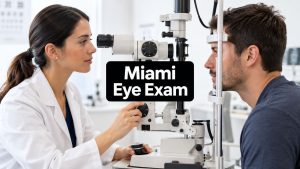

A standard eye exam in Miami takes about 45 to 60 minutes and typically costs $80 to $200 without insurance. The exact visit can be shorter, longer, or more medically focused depending on your symptoms, age, health history, and the tests your doctor recommends.
You may be searching for a Miami eye exam because road signs look softer than they used to, your child is struggling to read the board, or your eyes feel dry after a day on a screen. You might also be comparing offices, wondering whether you need a routine vision check or a medical evaluation, and trying to understand what insurance will cover.
A full eye exam isn't just a stronger version of a glasses prescription. It gives the optometrist a structured opportunity to evaluate how you see, how your eyes work together, and whether signs of eye disease require attention. Florida has historically had high eye-care utilization, with 80.5% of older adults reporting an eye examination within the past year and 77.1% reporting a dilated examination within the last year in a CDC analysis (CDC report on eye-care utilization and visual impairment). That makes preventive care especially relevant for Miami-area patients.
What a Miami Eye Exam Actually Includes
A first visit usually follows a predictable path. You'll check in, review your health information, complete preliminary measurements, discuss clarity and comfort, and then meet with the optometrist for a detailed evaluation.
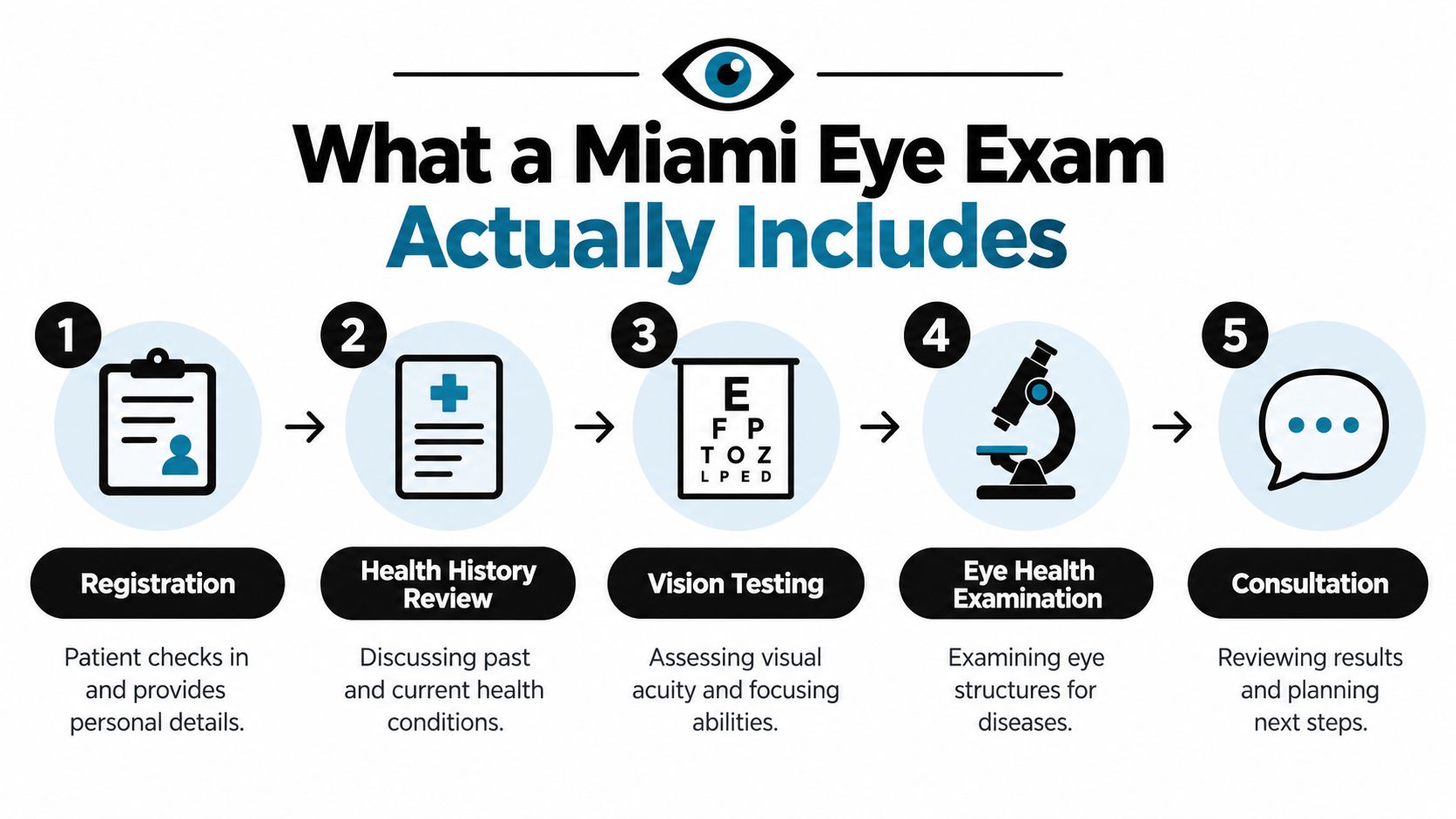
The visit from check-in to consultation
Registration and history: Bring your identification, insurance information, current eyewear, and a list of medications. The staff may ask about headaches, flashes, floaters, dryness, allergies, diabetes, high blood pressure, previous eye injuries, and family history of glaucoma or other conditions.
Preliminary testing: A technician may measure visual acuity, eye pressure, depth perception, color vision, and focusing performance. These measurements help the doctor identify whether a problem relates mainly to prescription, eye coordination, or ocular health.
Refraction: You'll look through different lenses and compare choices. The familiar “Which is clearer, one or two?” process helps refine the prescription, but it isn't the entire exam.
Eye-health evaluation: The optometrist examines the front and back of the eyes. Dilation may make the retina and optic nerve easier to inspect, particularly when the doctor is assessing medical risk.
Results and plan: You'll review the prescription, findings, recommended eyewear, follow-up timing, and any additional testing. You can also ask whether glasses, contacts, or both make sense for your work and daily routine.
A patient guide to what happens during an eye exam can help you know what to bring and what questions to ask. The most useful question in the room is often simple: “What did you find, and what should I do next?”
Routine Eye Exam vs Medical Eye Exam Explained
The difference comes down to the purpose of the visit, not whether the doctor uses an eye chart. A routine exam primarily addresses vision correction. A medical eye exam investigates symptoms, disease risk, or an abnormal finding that needs clinical assessment and possibly follow-up.
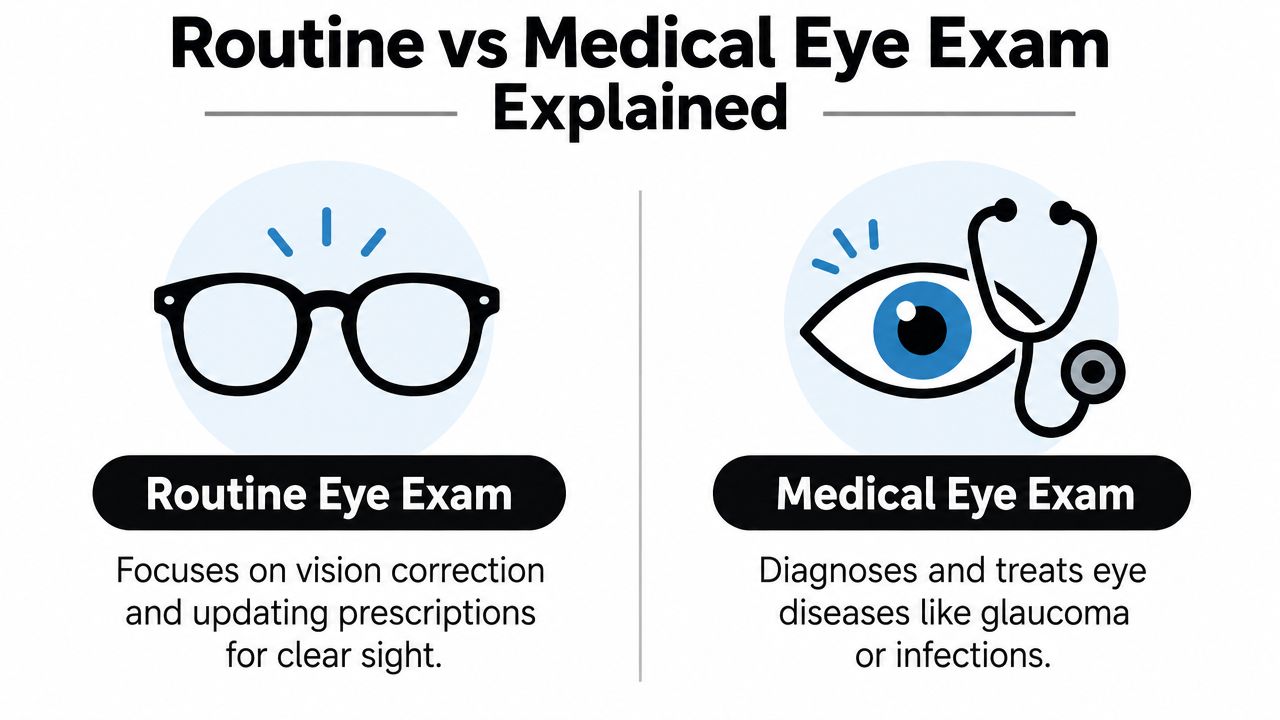
| Routine eye exam | Medical eye exam |
|---|---|
| Updates glasses or contact lens prescriptions | Evaluates symptoms, disease, or a concerning finding |
| Focuses on visual acuity and refraction | May include disease-specific examination and diagnostic imaging |
| Often supports eyewear purchases | May require treatment, referral, or scheduled monitoring |
| Common for stable vision | Appropriate for concerns such as eye pain, sudden changes, persistent redness, or disease risk |
A routine appointment may be appropriate when your vision has gradually changed and you don't have warning symptoms. A medical evaluation is more suitable when you have new flashes or floaters, a distorted area of vision, unexplained discomfort, recurring redness, or a health condition that can affect the eyes.
OCT, or optical coherence tomography, can add structural information that refraction cannot provide. It has been described as an effective glaucoma screening tool, with measurements such as retinal nerve fiber layer thickness and vertical cup-to-disc ratio supporting risk assessment (Glaucoma Today discussion of OCT screening and diagnosis).
Practical rule: If your concern is “I need clearer glasses,” start with a routine appointment. If your concern is “Something feels or looks different,” tell the office when booking that you may need medical eye care.
Insurance may classify these visits differently, so ask the practice which benefit applies before testing begins.
How Pediatric Eye Exams Work in Florida
Children often adapt to blurry vision without realizing that anything is wrong. A child may read, play, and attend school while relying heavily on one eye, so pediatric screening checks each eye separately rather than allowing the stronger eye to compensate.
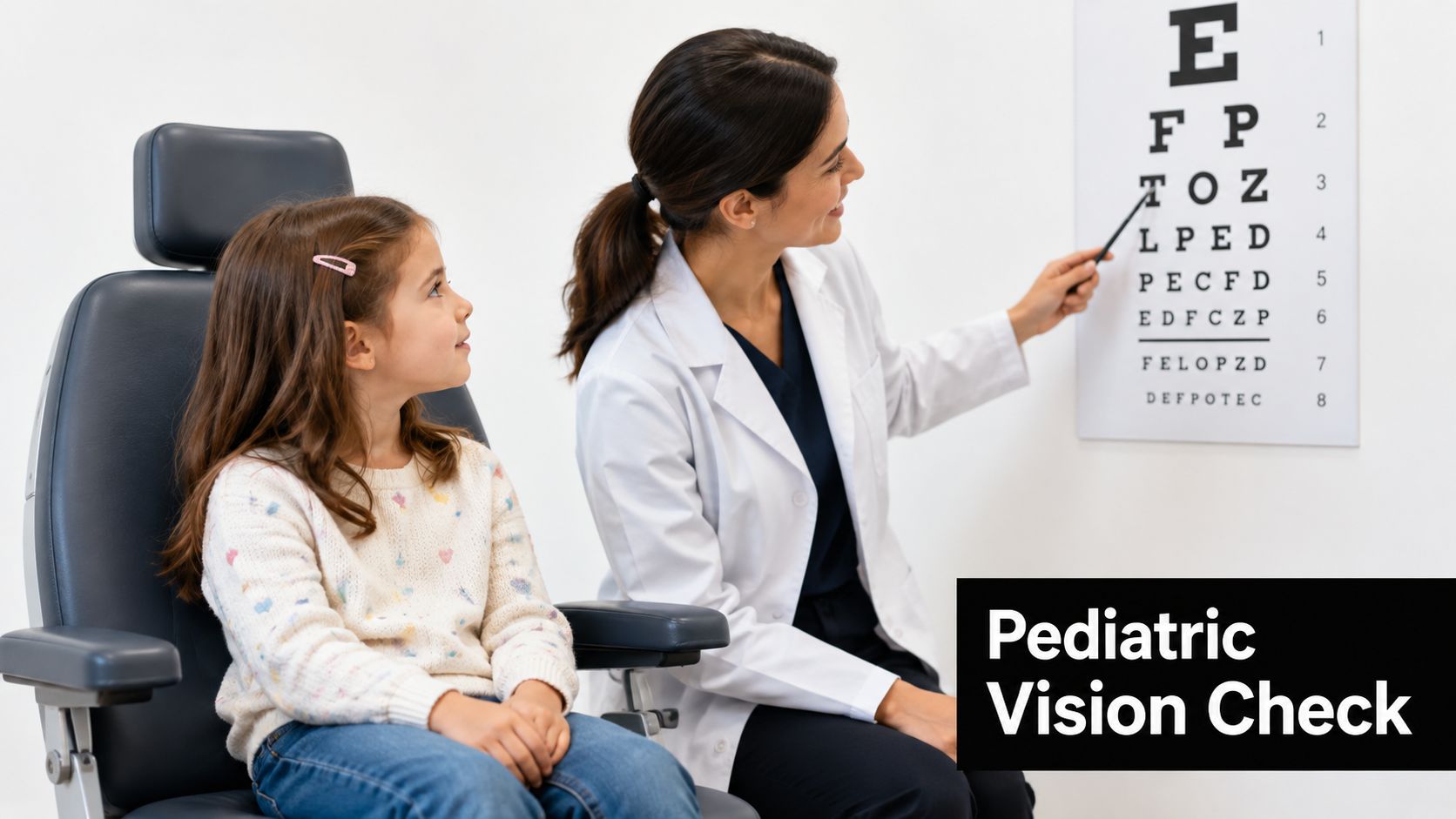
Age changes the screening standard
Pediatric screening uses age-based monocular visual-acuity thresholds. Children aged 36 to 47 months should generally identify most optotypes on the 20/50 line, while children aged 48 to 59 months are screened against the 20/40 line. Children aged 5 years and older should generally read at least 20/32 in either eye (pediatric vision-screening guidance).
These aren't grades that measure intelligence or effort. They're referral thresholds designed to help identify amblyopia, strabismus, and refractive error while treatment may still support visual development. Testing becomes more reliable after about age 4, and the examiner should test each eye separately with the child's usual correction when applicable.
The appointment may include matching symbols, naming pictures, following a light, checking eye alignment, and looking at the eye structures. A calm explanation usually works better than pressure. Parents can tell the child that the doctor is checking how each eye works, not testing whether they can memorize an adult eye chart.
Parents can find practical preparation guidance in this resource on children's eye exams. If a screening result leads to referral, that doesn't automatically mean a serious disease is present. It means the child needs a closer assessment.
The following video shows how a child-friendly vision check may be presented:
What Happens During a Contact Lens Fitting
A contact lens fitting adds another layer to a regular eye exam because the doctor must evaluate how a lens interacts with the cornea and tear film. A prescription alone doesn't tell you whether a lens will remain centered, stay comfortable, and provide enough oxygen during wear.
The optometrist may measure corneal curvature, inspect the corneal surface, evaluate tear quality, and discuss how many hours you want to wear lenses. Your work environment matters too. Air conditioning, screen use, outdoor activity, sports, and travel can all affect comfort.
Choosing a lens for real life
- Daily lenses: A fresh lens each day can suit patients who prefer simple handling or occasional wear.
- Monthly lenses: These can fit regular wearers who follow a consistent cleaning and replacement routine.
- Multifocal lenses: These may help patients who need support at more than one viewing distance, although adaptation and expectations should be discussed.
- Specialty lenses: These may be considered when standard lenses don't provide the needed comfort or visual performance.
The doctor may place trial lenses on your eyes, check movement and centration, and measure vision while the lenses are in place. You'll receive instructions for insertion, removal, cleaning, storage, and replacement. Never extend a lens schedule because it still looks clear. The eye surface can develop problems before discomfort becomes obvious.
A detailed contact lens fitting guide can help you prepare questions. Ask which lens material is being recommended, how long you can wear it, what symptoms require removal, and when the doctor wants to reassess the fit.
Miami Eye Exam Costs and Insurance Realities
Without insurance, a thorough Miami eye exam commonly falls in the $80 to $200 range, although the final price depends on the office, the scope of testing, and whether additional medical services are required. Confirm what the quoted fee includes, especially dilation, imaging, contact lens fitting, and follow-up visits.
Vision insurance generally helps with routine eye exams, prescription eyewear, and contact lenses according to the plan's benefits. Medical insurance may apply when the appointment addresses an eye condition, symptoms, or a health-related finding. The same patient can receive different coverage depending on the documented reason for the visit.
Medicaid access creates a separate challenge. Florida research found that 43.3% of counties had no ophthalmologists accepting Medicaid and 35.8% had no Medicaid-accepting optometrists, leaving over 3 million people in counties without a Medicaid-accepting eye-care provider (Florida Medicaid eye-care access research). The research also found that only 5.2% of federally qualified health centers reported offering eye-care services.
Questions to ask before booking
- Coverage: Is the office in network for your exact plan?
- Appointment type: Is the quoted price for a routine exam, a medical exam, or both?
- Testing: Are dilation and imaging included or billed separately?
- Follow-up: If the doctor finds a problem, what visits or referrals may follow?
- Payment: What payment options are available if you're uninsured?
A practical guide to comprehensive eye-exam costs can help you compare prices, but the office's written estimate remains the most reliable source for your appointment.
How to Prepare for Your Miami Eye Exam
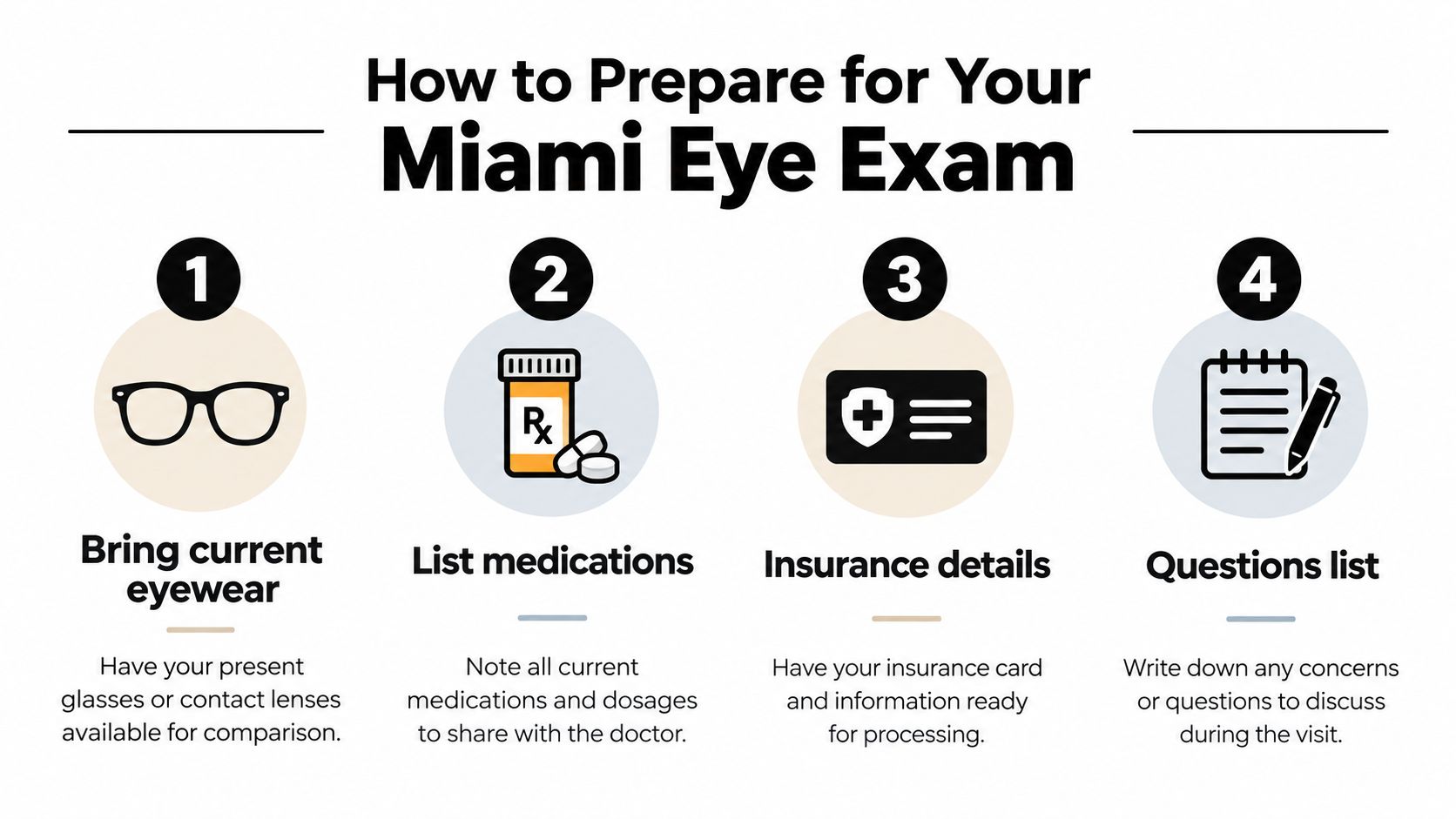
A little preparation helps the exam feel organized, like handing the doctor a clean file before the visit begins. Bring your current glasses, contact lenses, medication list, insurance card, and any recent eye records you can gather.
Write down your symptoms before you arrive. Note when they started, whether they affect one eye or both, and whether they show up during reading, driving, screen use, or time outdoors. Include headaches, light sensitivity, dryness, flashes, floaters, and episodes of blurry vision.
If you wear contacts, ask the office whether you should arrive wearing them or bring them in a case. The doctor may need to see how your eyes look without lenses, or compare your current correction with a new prescription.
Dilation can make near vision harder for a while and bright light more uncomfortable. If you are unsure how your eyes respond, arrange a ride home and bring sunglasses for the trip back. Leave room in your schedule if you have work or school afterward, since your vision may need time to settle.
A short checklist
- Bring current eyewear: Pack glasses, contact lenses, and a lens case.
- List medications: Include names, dosages, and relevant medical conditions.
- Prepare insurance details: Have your card and plan information available.
- Write questions: Ask about findings, prescription changes, dilation, and follow-up.
Why Choose Style Site Optical in South Florida
Choosing an eye-care office involves more than finding an appointment time. Patients should look for a practice that can handle prescription needs, eye-health evaluation, contact lens services, and eyewear decisions without forcing every concern into a separate conversation.
Style Site Optical offers eye exams, advanced diagnostic testing, contact lens fittings, and designer eyewear in one practice. Its services include visual-acuity and refractive assessment, dilated examination and retinal health checks, glaucoma screening, and color-vision and depth-perception evaluation.
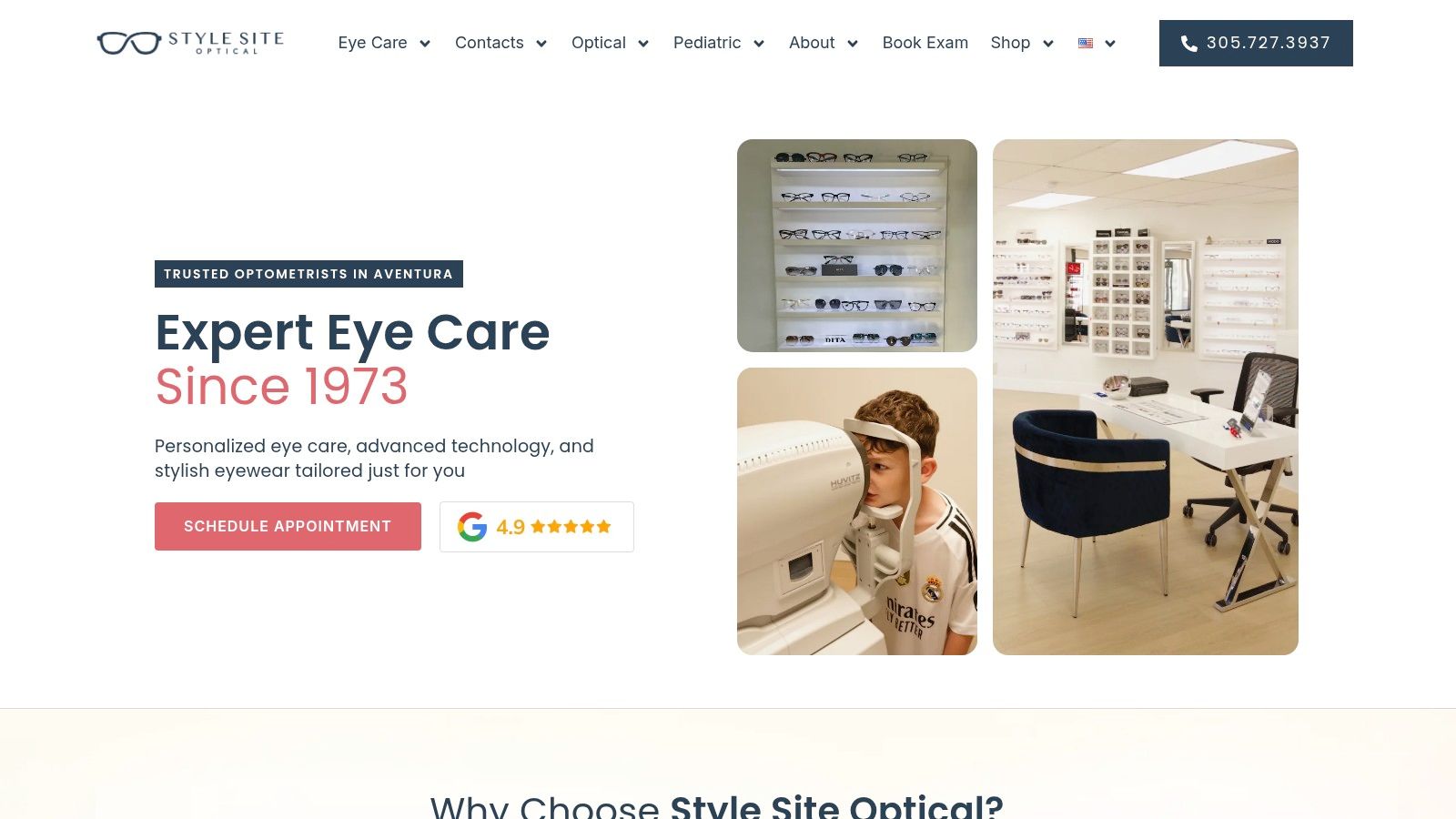
Dr. Teresita Bollar leads the practice and brings an award-winning optometric background to care for families in Aventura and nearby Miami-area communities. Patients can discuss medical findings, prescription options, contact lenses, coatings, and frames during the same care experience.
A useful local practice should make the next step clear, whether that means updated glasses, a contact-lens trial, monitoring, treatment, or referral.
Before booking, describe your reason for the visit in specific terms. Say whether you need a prescription update, have symptoms, want a pediatric evaluation, or need contacts. You can learn more about Dr. Teresita Bollar's optometric background and use the practice's appointment process to request the appropriate visit.
Frequently Asked Questions About Eye Exams in Miami
How often should adults and children have eye exams?
An appropriate schedule depends on age, symptoms, prescription changes, contact lens use, family history, and medical conditions. Children may need an evaluation when a concern appears or a screening leads to referral. Adults with stable vision can follow the interval their optometrist recommends. People with glaucoma risk, diabetes-related concerns, recurring symptoms, or other eye conditions may need closer monitoring.
What should I do if I can't drive after dilation?
Arrange a driver, use a rideshare, or remain nearby until your vision feels comfortable. Sunglasses may ease light sensitivity, but they do not make driving safe when your vision is blurred. Tell the office before your visit if transportation is difficult. The team can explain the likely effects of dilation and help you plan around them.
How quickly will I receive results if additional testing is needed?
Many prescription findings can be discussed during the appointment. Additional medical testing may need a doctor to review images, compare results, schedule a follow-up, or coordinate a referral. Before leaving, ask when you should expect an interpretation and who will contact you if the office finds a concern.
Eye exams also help identify health needs that may not be obvious from changing glasses alone. One CDC analysis estimated 9.6% prevalence of visual impairment in Florida alongside other eye-health measures. That finding supports treating an eye exam as health care, with the visit shaped by symptoms, risk factors, and the tests your eyes require.
For patients ready to schedule, Style Site Optical offers examinations, diagnostic evaluation, contact lens fittings, and eyewear guidance in Aventura and surrounding South Florida communities. Review the services at Style Site Optical, then request an appointment suited to your vision or eye-health concern.