
You know the drill. You try on a pair of sunglasses, they look fine in the mirror for five seconds, then they start sliding down your nose, the temples squeeze, and the lenses hang past your cheekbones like they belong to someone else. If your head is on the smaller side, the problem isn't your face shape. It's fit.
For sunglasses for small heads, the first numbers to care about are blunt and practical. A widely used fit rule puts lens width at 40–45 mm or 44–50 mm, frame width around 118–130 mm, and temple length around 120–145 mm (Oliver Goldsmith fit guide). Retail guides also treat a small face as roughly 4.5 to 5.1 inches across the temples, about 115–130 mm, with bridge widths around 15–22 mm and lens widths from 47–52 mm (All About Vision small face sizing). Those ranges give you a real filter, not a guess.
Why Standard Sunglasses Fail Petite Faces
A pair can look polished on the rack and still fail on a smaller head. The frame rides too wide, the bridge leaves daylight over the nose, and the temples keep slipping because the proportions were never built for a petite fit.
The problem starts with scale
A frame labeled small can still miss the mark. Fit guidance from Who What Wear fit advice tells shoppers to check lens width, bridge fit, and temple length, along with lens depth and overall scale, because a frame can be narrow in one area and still pinch, slide, or sit too high on a small head.
Practical rule: if the frame extends well past your temples, it is the wrong size, no matter how good it looks.
Face-shape labels do not solve this problem. A petite face needs a technical fit check. If the bridge is too wide, the glasses drop. If the temples are too long, the back of the frame flares out and loses grip. If the lens width is too broad, the frame overwhelms your features and feels heavy by the end of the day.
Small-head shoppers need to start with measurements, not style buzz. A narrow-looking frame can still be off. A bolder frame can still work if the proportions are right. That difference decides whether your sunglasses stay put or become something you keep adjusting.
Use the numbers first. If the frame misses your size range on paper, it will not sit better after a few minutes on your face.
Style Site Optical's small sunglasses guide is a useful reference if you want to compare petite frame details without guessing. It helps you judge fit before you buy, which is faster than trying on frame after frame that was never sized for you.
How to Measure Your Face for Eyewear
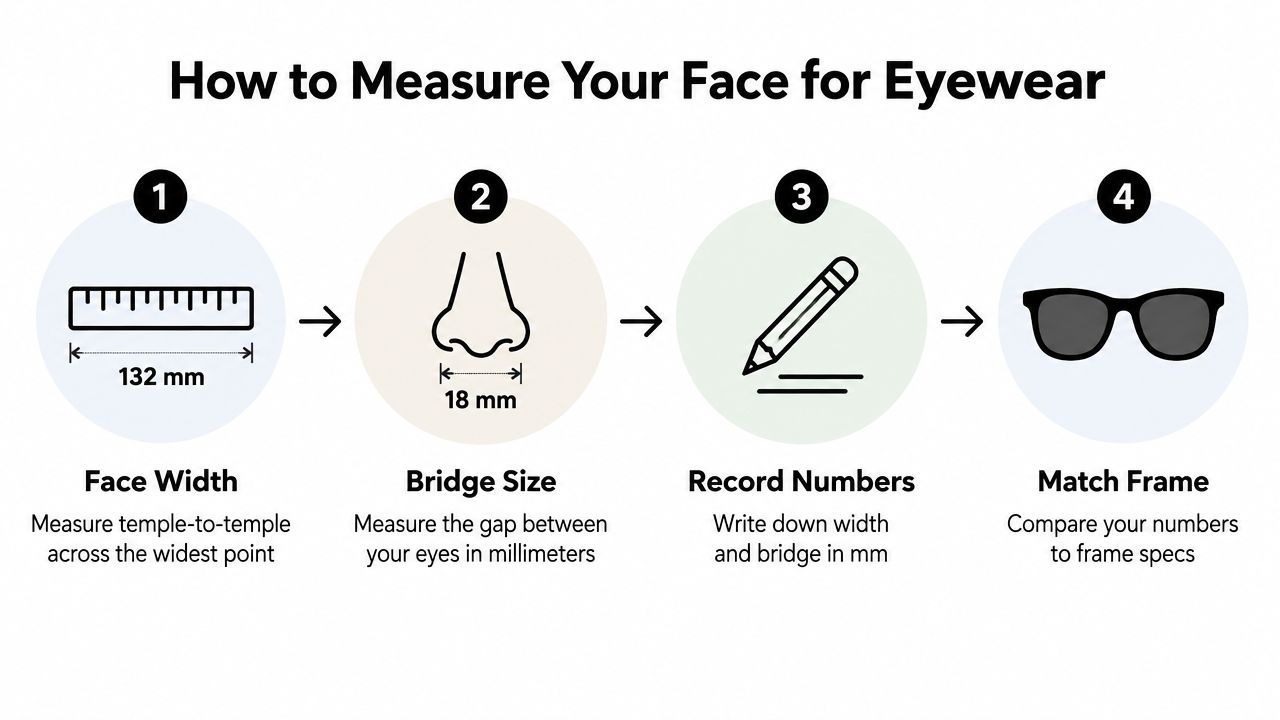
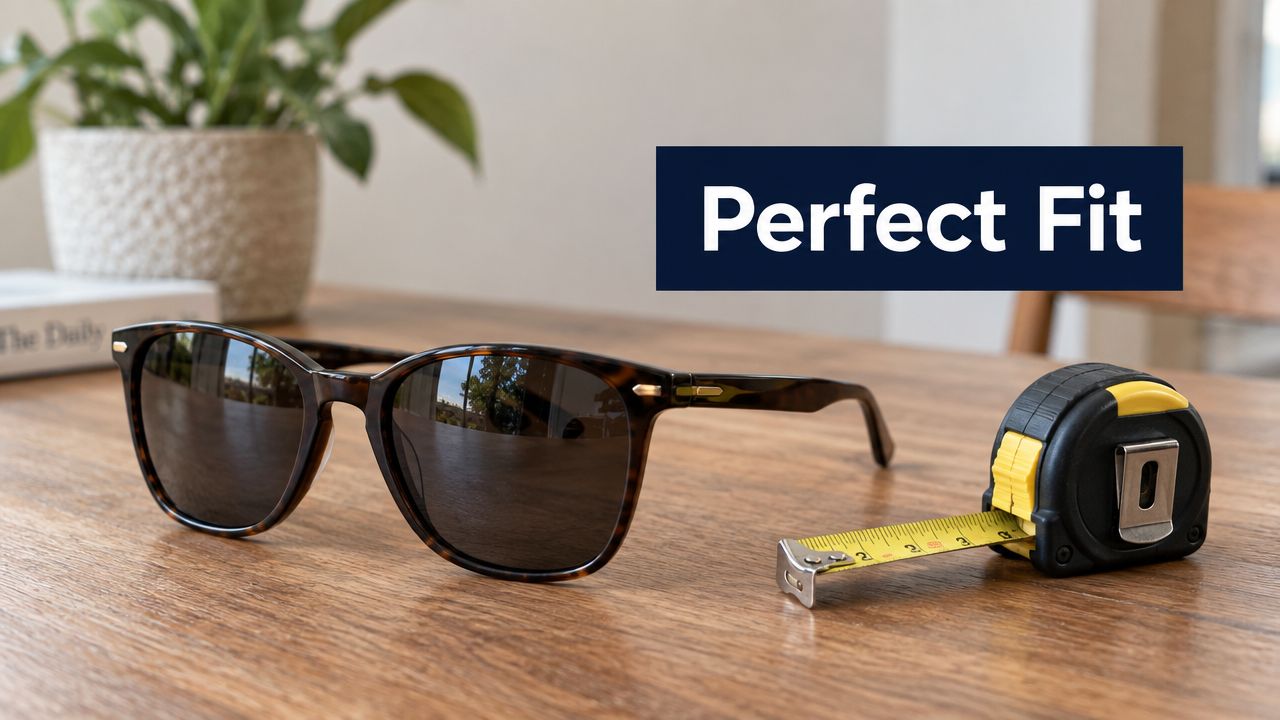
Start with a millimeter ruler or a soft measuring tape. Stand in front of a mirror, keep your face relaxed, and measure the widest point from temple to temple. That number tells you whether you belong in a petite frame category or whether you're trying to force a standard size to behave like a small one.
Use the three numbers that matter
The first number is face width. The second is bridge width, the gap area that determines whether the frame sits high and stable or slides low and loose. The third is temple length, which tells you how far the arms run back before they curve behind the ears.
If you already own a pair that fits well, read the numbers on the inside arm. They're usually printed in the format of lens width, bridge width, and temple length. Treat that pair as your benchmark. If those numbers already feel right, you've got a working template for future purchases.
Retail fit guidance for small faces often translates the width problem into practical shopping ranges, and that's the value of measuring your own face first. The point isn't to memorize every size label. It's to know your zone before you click buy.
A solid habit is to compare your face measurements to the specs on the frame listing, then decide fast. If the lens width is outside your comfort range, move on. If the bridge looks off, move on. Don't talk yourself into a frame because the color is nice.
For extra measurement references, Dirt Cheap Headwear sizing tips can help you think in terms of real dimensions instead of vague sizing terms. And if you want a cleaner way to read frame specs, Style Site Optical's eyeglass frame size guide keeps the sizing language straightforward.
Write down the numbers that fit you, not the numbers the industry uses as a marketing shortcut.
A quick home check that works
Measure, record, and compare.
- Put the ruler across your face at the widest temple points.
- Measure the bridge area where the frame would rest.
- Check an existing pair you wear comfortably.
- Match those numbers against the frame spec before you order.
That routine saves time and stops bad purchases before they happen.
Evaluating Bridge Fit and Temple Length
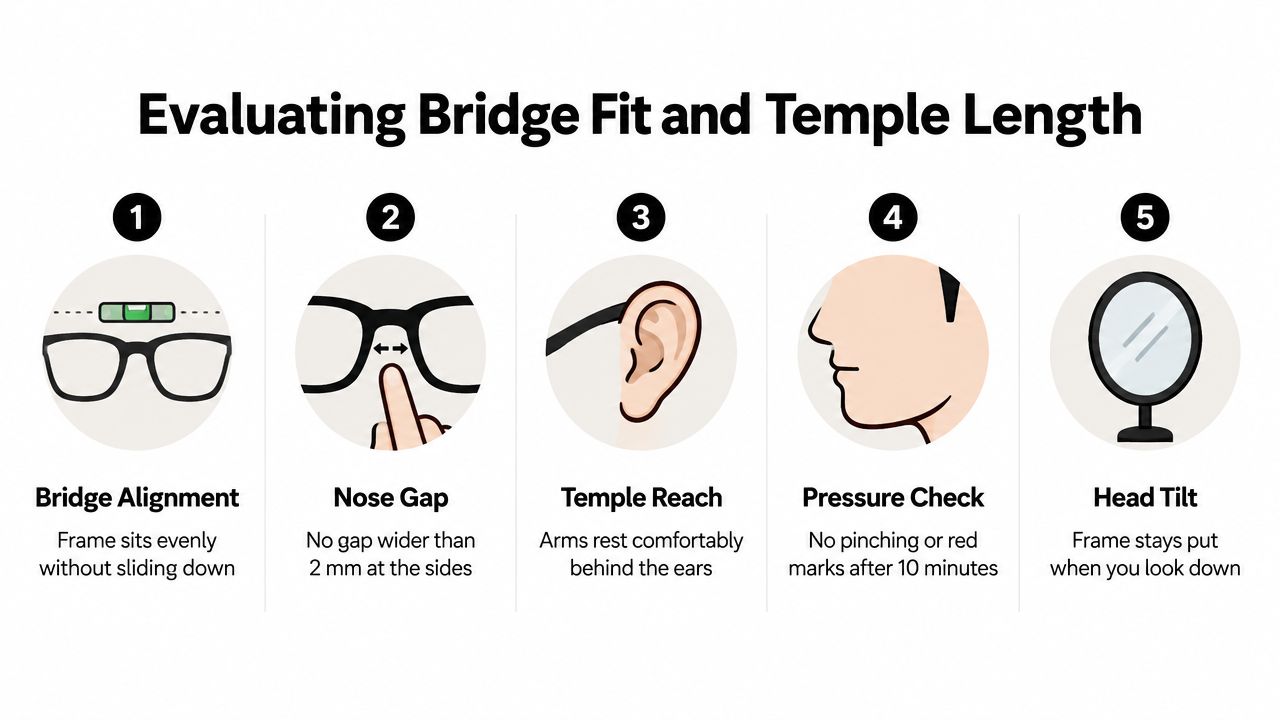
A frame can pass the width test and still fail on the face. On a small head, the bridge decides whether sunglasses sit or keep sliding, twisting, and leaving marks. Too wide, and the frame drops. Too narrow, and it bites the nose.
Bridge fit determines stability
Petite faces need the bridge to hold the frame centered, not just attached. Small-face fit guides point to bridge widths around 14–22 mm, but the issue is how the bridge behaves once the frame is on your face (Who What Wear fit advice; All About Vision sizing framework). A few millimeters can change whether the lenses sit level or drift down your nose.
Use the mirror, then move. The frame should sit centered without nose drift, and the lenses should stay even when you look down. If you see the frame creeping forward or tilting to one side, the bridge is wrong for your face.
Adjustable nose pads give you more control, especially if one side of your nose sits higher than the other. Fixed acetate bridges, including keyhole styles, can work well too, but only when the shape matches your nose and keeps the lenses aligned. A plastic bridge is not automatically less secure. It just needs better geometry.
A good bridge feels quiet. You notice it only when it is wrong.
Temple length deserves the same scrutiny. Fit guides for small heads commonly place temple length in the 120–145 mm zone, with shorter options often working better for stability (Oliver Goldsmith fit guide). If the temples run too long, the arms flare and the frame creeps forward. If they are too short, they press behind the ears and wear you out.
The bend behind the ear matters as much as the straight length. That curve, often called the drop, should lock the frame in place without digging in. If it sits too high, the frame feels loose. If it sits too far back, the sunglasses slide during walking, driving, or bending over.
For a clean technical reference, Style Site Optical's Shamir Piccolo page keeps the focus on fit details instead of styling hype.
What to check in the mirror
- Bridge alignment: the frame should sit evenly without nose drift.
- Temple reach: the arms should rest comfortably behind the ears.
- Movement test: look down and see whether the frame stays in place.
- Pressure test: ten minutes should not leave pinching marks.
If one of those fails, the frame size is wrong, even if the style looks good.
Navigating Oversized Trends for Petite Proportions
The 2026 sunglasses conversation is split in two directions. Tiny and mini frames are back hard, but oversized silhouettes are still everywhere. That tension is exactly where small-head shoppers get misled, because a trend isn't the same thing as a good fit.
Tiny doesn't automatically mean better
Mini frames can look cute, but they often cut too much coverage for real wear. They may fit the width of a small face while still sitting awkwardly high or leaving too much open space around the eyes. Style coverage matters, and so does the way the frame protects your peripheral vision.
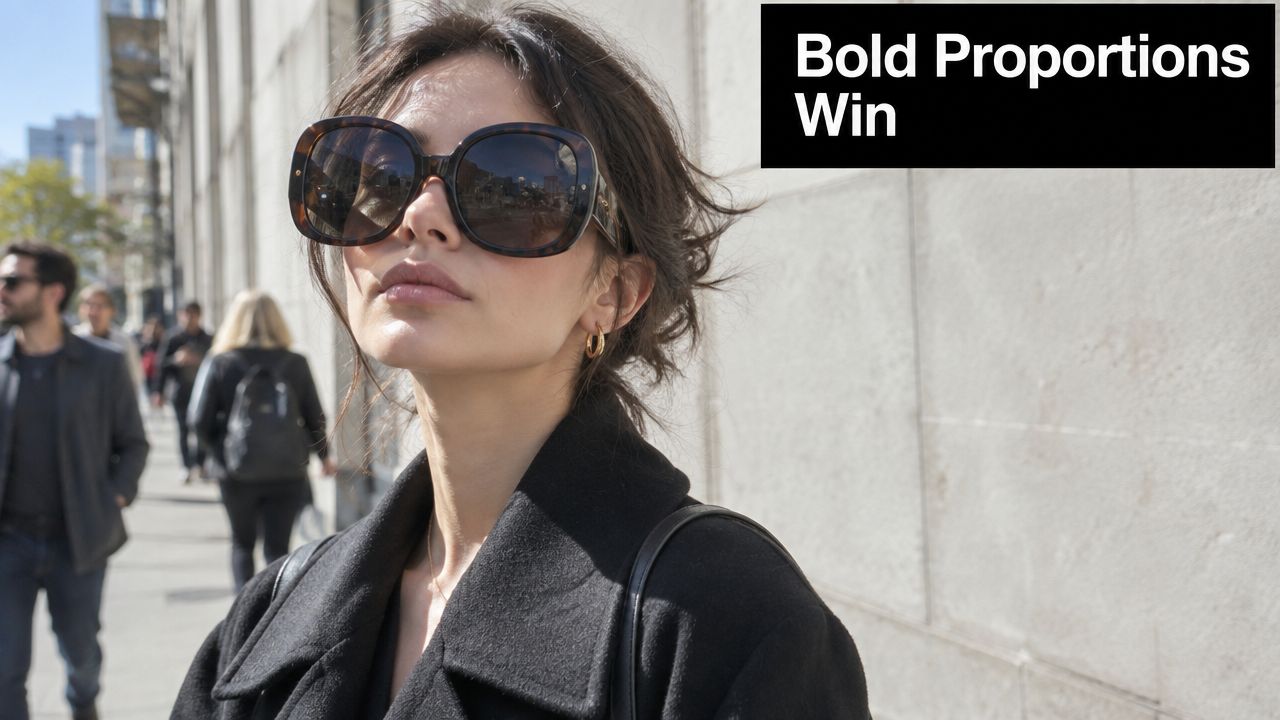
Oversized frames can work on petite faces, but only when the engineering is right. A larger silhouette needs a narrower width, a controlled bridge, and temple geometry that doesn't pull the frame off balance. In other words, the shape can be big if the fit is disciplined.
The problem with most oversized fashion frames is simple. They're made to look dramatic first and stay in place second. On a small head, that usually means sliding, cheek contact, and a heavy front that keeps dropping.
Choose the trend that serves your face
If you want the mini look, go for clean proportions, not novelty-sized lenses. If you want oversized drama, keep the frame lightweight and make sure the bridge and temples are scaled down enough to hold the frame steady. That's the part people skip, then regret later.
Direct advice: buy the frame that stays level when you move, not the one that looks most dramatic in a selfie.
A lot of fashion advice treats “small” and “oversized” like opposite camps. They're not. A petite shopper can wear either one if the measurements are disciplined. What you can't do is ignore fit and expect style to carry the whole job.
Engineering beats trend talk. A well-made oversized frame on a small face should feel secure, not costume-like. A mini frame should feel intentional, not toy-sized.
For South Florida shoppers who want an in-person check, Style Site Optical's optical services in Aventura can be a practical stop when online sizing keeps missing the mark.
Professional Adjustments and Pediatric Fittings
A frame that looks right in the mirror can still feel wrong on your face. Small heads need the fit tuned, so the temples sit flat, the nose pads line up, and the front rests without pressure.
Small adjustments that help
Acetate frames often respond well to gentle warming, but the work has to stay controlled. Ease the temple arms into place with small bends, and stop once the frame holds its shape. If the hinges feel loose, tighten them with a precision driver before the problem gets worse.
Frames with adjustable nose pads give you more control. A slight inward adjustment can improve grip, cut down on slipping, and lift the lenses into a better position. That matters on narrow bridges, where a tiny change can shift the whole fit.
For a clear checklist on when a home tweak is enough and when a frame needs proper tools, Style Site Optical's repair and adjustment guide is the right reference.
Kids need different thinking
Children with small heads need more than a shrunken adult frame. Flexible hinges, secure temple placement, and impact-resistant lenses matter because kids move more, drop frames more, and outgrow them faster. A strap helps on active days, but it should support the frame, not force it into position.
Style Site Optical's adjustable frame options show the point clearly, small-fit eyewear needs real structure, not just a smaller label. Pediatric fittings need the same discipline. Comfort and retention matter as much as appearance, and a frame that slides or pinches will not get worn.
If a frame needs force, heat, or repeated pushing to stay straight, it's not fitted yet. It's just being tolerated.
A proper fit should hold through daily movement. Clean the lenses, check the screws, and recheck the balance each week. Small heads do not need more frame, they need better control of the frame they're wearing.
Getting Expert Eyewear Fittings in South Florida
Online measurements get you close. An in-person fitting gets you finished. That matters if your frame keeps slipping, your bridge is finicky, or you want sunglasses that sit properly without constant adjustment.
Style Site Optical in South Florida works well for this kind of problem because the fitting can be checked against your face, your prescription needs, and the way the frame centers on your eyes. Dr. Bollar and the team can look at the full picture, not just the front-view mirror test. If you're comparing travel cases too, a practical option like the 3 slot eyeglass holder box makes sense for keeping multiple pairs organized without crushing the frames.
That local fit matters if you're shopping in Aventura, Miami, Hollywood, or North Miami Beach, where sunwear gets used hard and often. The right shop should help you compare designer options, bridge fit, and temple length without making you guess.
If you've been trying to make standard frames behave, stop forcing it. Bring your measurements, bring the pair that fits best, and let a professional confirm the size before you waste more time on almost-right sunglasses.
If you're ready to stop fighting your frames, visit Style Site Optical for a proper sunglasses fitting, prescription guidance, and a curated eyewear selection built to match smaller proportions. Bring your measurements, or bring the pair you wear most, and let the team check bridge fit, temple length, and overall balance in person.